

Introduction
Independent F&I agents face unique challenges when securing new dealership partnerships. Your success hinges on mastering each stage of the sales cycle—from initial prospecting to sealing the deal. This comprehensive guide covers proven sales techniques designed to help you build a profitable and repeatable F&I sales process.
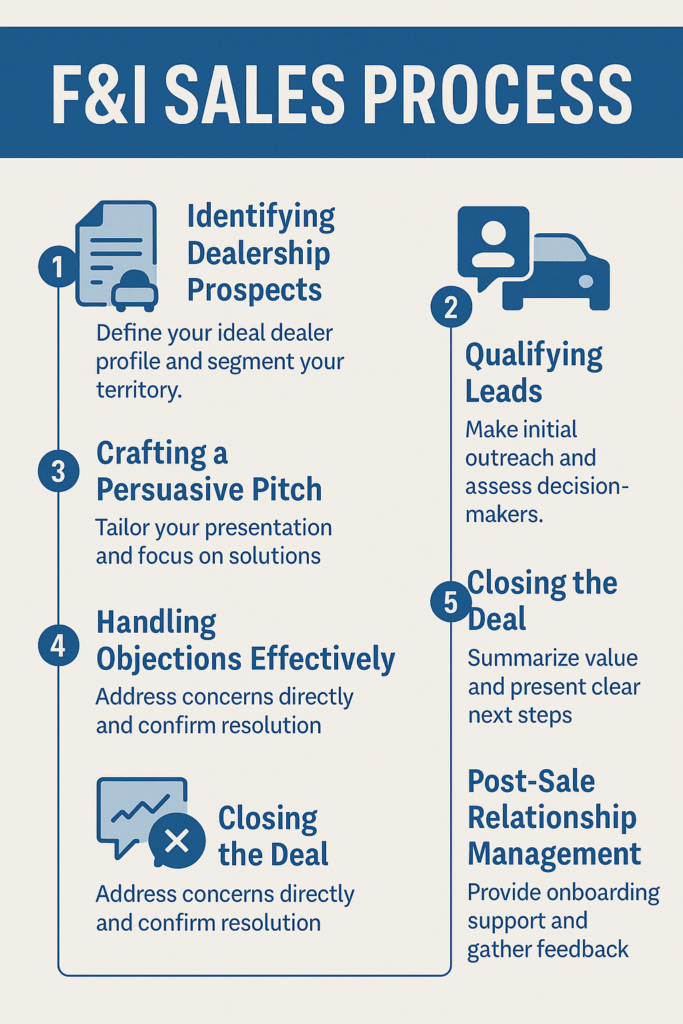
Stage 1: Identifying Dealership Prospects
Effective sales begin with strategic prospecting:
- Define Your Ideal Dealer Profile: Identify dealerships that align with your product strengths and target market.
- Use Data Analytics: Leverage platforms like Velocifi to pinpoint high-potential dealerships based on sales performance and growth potential.
- Segment Your Territory: Prioritize leads based on dealership size, location, product fit, and readiness to buy.
Stage 2: Qualifying Leads
Proper qualification saves time and ensures efficiency:
- Initial Outreach: Make introductory calls or emails to gauge interest.
- Discovery Conversations: Ask open-ended questions to understand the dealership’s needs, pain points, and goals.
- Assess Decision-Makers: Confirm you’re speaking with individuals empowered to make purchasing decisions.
Stage 3: Crafting a Persuasive Pitch
Your pitch should clearly demonstrate value:
- Customize Your Presentation: Tailor your pitch based on insights gathered during qualification.
- Focus on Solutions: Emphasize how your F&I offerings address specific dealership challenges or goals.
- Use Data to Strengthen Your Case: Incorporate dealership performance data to highlight potential improvements and ROI clearly.
Pitch Example:
“Based on your dealership’s current product penetration, our F&I solutions could potentially increase your per-vehicle revenue by up to 20%. Here’s how we’ve achieved similar results for dealerships like yours…”
Stage 4: Handling Objections Effectively
Prepare to handle common objections proactively:
- Listen Actively: Show genuine understanding of dealership concerns.
- Address Concerns Directly: Provide clear, concise responses supported by data and testimonials.
- Confirm Resolution: Ask clarifying questions to ensure the objection has been addressed satisfactorily.
Stage 5: Closing the Deal
Closing confidently is key:
- Summarize Value Clearly: Reinforce how your solutions solve the dealership’s specific problems.
- Present Clear Next Steps: Guide dealerships toward the final decision with a straightforward, actionable path.
- Use Assumptive Language: Speak confidently about next steps, assuming the dealership is ready to proceed based on previous conversations.
Example Closing Statement:
“Given what we’ve discussed, the next step would be scheduling training sessions for your team. Would next Tuesday or Thursday work better for you?”
Stage 6: Post-Sale Relationship Management
Winning the sale is just the start:
- Onboarding Support: Ensure smooth implementation and training.
- Regular Check-Ins: Maintain consistent communication to ensure satisfaction and identify additional opportunities.
- Gather Feedback: Regularly seek feedback and adjust your approach accordingly to enhance long-term partnerships.
Conclusion
Building a successful sales process as an independent F&I agent means mastering each stage—from prospecting to post-sale relationship management. By applying the techniques outlined in this guide consistently, you’ll create a repeatable and profitable sales approach, solidifying your reputation as a trusted and effective partner for dealerships.